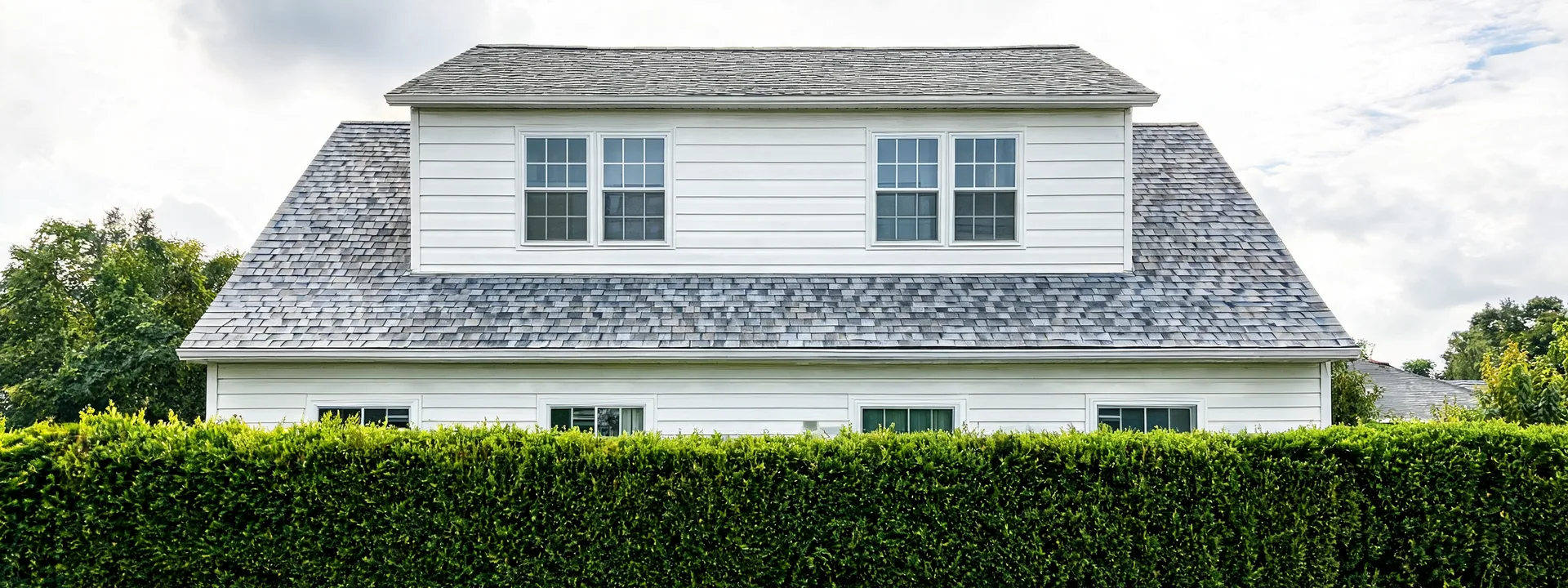
Why Dormers Work for Nassau County Homes
Nassau County’s South Shore communities — Valley Stream, Lynbrook, Rockville Centre, Elmont, Freeport — have a housing stock problem: lots are small (typically 40x100 feet), setbacks limit ground-floor expansion, and many families have outgrown their cape cods and ranches.
A dormer is the answer that doesn’t require touching the ground-floor footprint. Dormers convert unused attic space into full-height livable area by pushing out through the roof. Done on a cape cod, a full rear shed dormer can add two bedrooms and a full bathroom — space that didn’t exist before — without using a single square foot of additional lot coverage.
Dormer King (dormerking.com) has dominated this market for 43+ years. We compete on technical quality and project management — not just price.
Types of Dormers We Build
Shed Dormers
The most popular in Nassau County. A shed dormer runs the full width (or most of the width) of the rear roof slope, creating a full-height rear wall with standard windows. This maximizes the livable space because the entire rear upper area becomes usable.
On a cape cod, a full-width shed dormer on the rear converts the knee-wall attic space into rooms with full-height ceilings — typically adding 300–500 square feet of livable area.
Gable Dormers
A gable dormer is a single, smaller dormer with its own triangular peaked roof — the classic “picture-book house” look. They add light and some space, but less square footage than a shed dormer. Often used in pairs or triplets for aesthetic effect, or when only one room is being converted.
Hip Dormers
Hip dormers have three sloping sides rather than two. Less common in Nassau County but used when the architectural style of the existing home calls for it.
Eyebrow Dormers
Small, shallow curved dormers that add light and character but minimal headroom. Primarily aesthetic. Not a space-creation solution.
Why Cape Cods and Dormers Go Together
Nassau County was built during the postwar housing boom of the 1940s and 1950s. The Levittown model — modest cape cods on small lots — created neighborhoods across the South Shore that remain exactly as built, just with much larger families now living in them.
A cape cod’s attic space is the biggest untapped square footage on the property. The rooms are there in skeletal form — the floor joists exist, the plumbing and electrical can be run — but the sloped ceilings make much of the space unusable without a dormer.
A full rear shed dormer on a standard cape cod typically creates space for:
- Two bedrooms (each 12x14 feet or larger)
- A full bathroom
- A hallway with linen closet
This is more space than many room additions, at often a lower construction cost per square foot — because you’re not building a new foundation.
Nassau County Permits and HOA Rules for Dormers
Every dormer in Nassau County requires a building permit. No exceptions. The scope includes:
- Architectural drawings with exterior elevations
- Structural engineering (the existing roof framing and ceiling joists need to be evaluated — dormer work always involves structural changes)
- Permit filed with your municipal building department (Town of Hempstead, Town of North Hempstead, or your incorporated village)
- Inspections at framing, insulation, and final stages
If your home is in an incorporated village with its own architectural review — some villages have appearance or design standards — the dormer design may need approval before permits are issued. We flag this during the initial assessment.
HOA restrictions are rare in Nassau County’s older South Shore communities, but gated communities and some newer developments have CC&Rs that regulate exterior changes. We advise checking this before starting design.
Our Process for Nassau County Dormer Projects
Step 1: Site Visit We visit your home, assess the attic space, measure the roof framing, and discuss your goals for the upper level. We look at the existing ceiling joists (which become the floor joists for the dormer space), the ridge beam height, and the relationship to the property lines.
Step 2: Design and Engineering Our architect designs the dormer and upper floor layout. Our structural engineer reviews the existing framing and designs the dormer framing. Both documents go into the permit application.
Step 3: Permit Filing Filed with your building department. Timeline: 4–8 weeks for review.
Step 4: Construction We open the roof, build the dormer frame, get it weathertight, then work on the interior — framing walls, running electrical and plumbing, insulating, drywalling, finishing. Most dormer projects take 10–16 weeks of active construction.
Step 5: Certificate of Occupancy We handle all inspections and close out the permit.