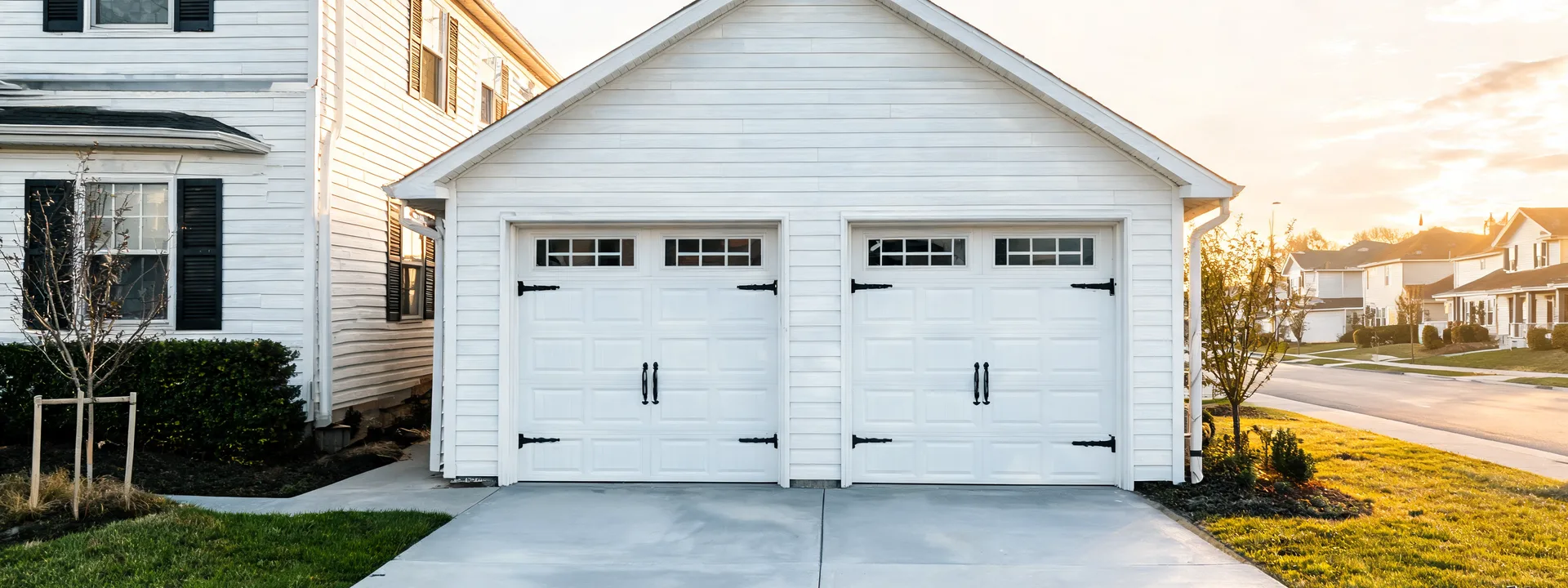
Why Nassau County Homeowners Add Garages
Most Nassau County homes were built with a single-car attached garage or no garage at all. Forty years later, the family has two cars, a lawn tractor, a kayak, and a serious shortage of storage.
A garage addition solves the parking problem and — when built with a room above — creates bonus living space at the same time. A two-car garage with a bonus room above is one of the best value-per-dollar projects in Nassau County right now.
We build attached garages, detached garages, and garage additions with living space above. Every project includes permit management.
Attached vs. Detached Garage Additions
Attached Garages
An attached garage connects directly to the main house, typically sharing a wall on one side. Access from the garage to the house is through a fire-rated door (required by code). Attached garages:
- Are typically less expensive per square foot than detached because they share a wall with the house
- Make it easier to run utilities (electrical, heat) from the existing house
- Often include a bonus room above, using the garage footprint for additional living space
- Require setback compliance on three sides (the house wall handles the fourth)
Nassau County building codes for attached garages include specific fire separation requirements between the garage and the living space — the shared wall and ceiling must be fire-rated. We build to these requirements.
Detached Garages
A detached garage stands as a separate structure in the yard. Detached garages:
- Don’t have fire separation requirements from the main house (no shared walls)
- Can be built further back on the lot without affecting the main house footprint
- Are the only option when the home’s layout doesn’t allow for a practical attachment point
- Often used when the homeowner wants workshop space or storage that’s separate from the main living area
Detached garages also require permits, and they count toward lot coverage.
Nassau County Setback Rules for Garage Additions
Setback requirements for garages in Nassau County residential zones vary by municipality, but general guidelines:
Attached garages: Must meet the same front, side, and rear setbacks as the main house. If you’re adding a garage where the house currently has open space alongside it, we verify that the garage won’t violate the side setback.
Detached garages: Often subject to different setback rules than the main house — typically a reduced rear and side setback for accessory structures. In many Nassau County zones, a detached garage can be placed within 5 feet of the rear property line and 5 feet of the side property line.
Height limits: Detached accessory structures typically have height limits (often 15 feet to the peak). If you want a room above the garage, we design to stay within these limits.
We pull the specific zoning regulations for your address before designing anything. The rules vary enough between municipalities that general guidance can mislead.
Garage Addition With Living Space Above
Adding a room above the garage is one of the smartest investments in Nassau County:
- The garage footprint becomes the subfloor for a bonus room
- The space above can be a home office, guest room, in-law bedroom, or family room
- Construction cost per square foot for the above-garage space is favorable because the structural work is shared with the garage
- It adds significant appraisal value
What the bonus room above needs: proper insulation (the garage ceiling below is exposed to winter temps), stairs from inside or outside, electrical, heat (typically a mini-split), and egress windows if it’ll be used as a sleeping room.
We design garage-plus-room additions as a single, integrated project. The structural drawings account for the upper floor from the start.
Our Process
Site visit: We walk the property, check setbacks on your survey, assess utility access, and discuss your goals. We confirm what zoning allows before design begins.
Design: Architect produces plans for the garage structure and any upper-level space. Detached garages under a certain size may be designed without a full architectural stamp — we advise on this during the consultation.
Permits: Filed with your building department. Garage permits are typically reviewed faster than room additions — 3–6 weeks is common.
Construction: Foundation (slab-on-grade for most garages), framing, roofing, garage doors, electrical, siding to match the main house, and any interior finish work for the room above.
CO: Final inspection and Certificate of Occupancy before we close out.