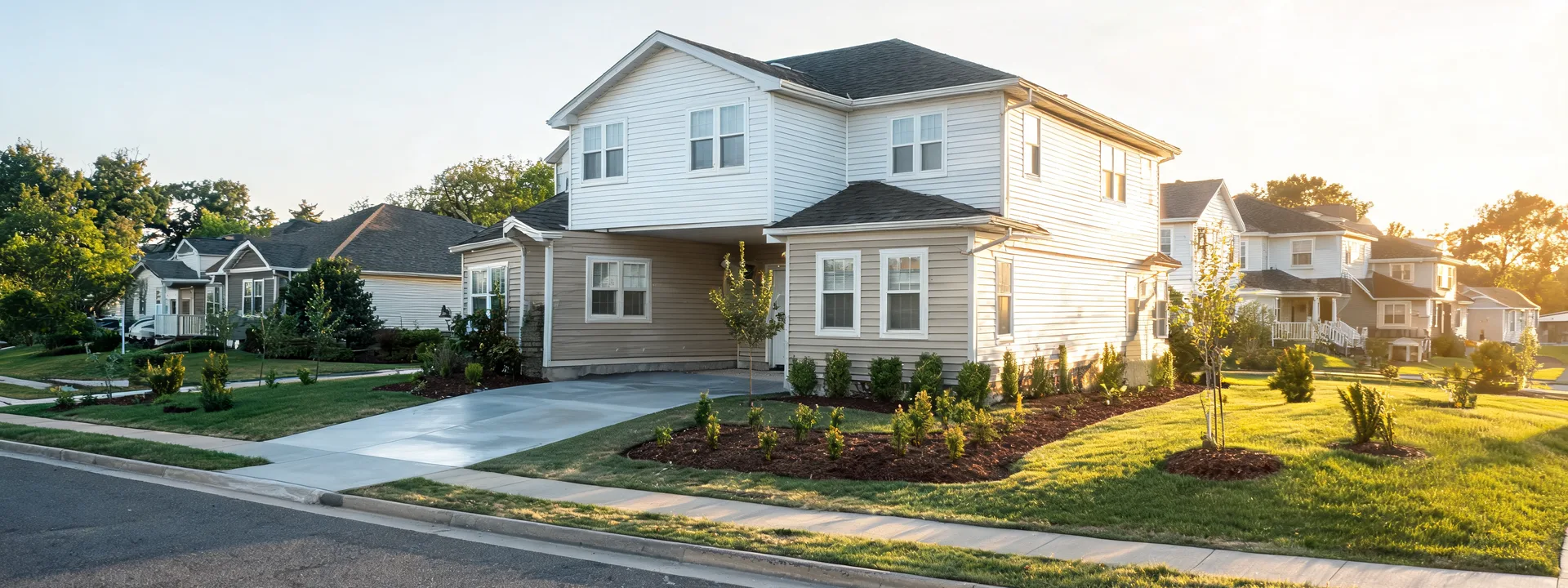
Second Story Additions in Nassau County
When your lot doesn’t leave room to build out, building up is often the smartest way to add serious square footage. A second story addition in Nassau County transforms your home’s footprint without touching your yard, giving you the extra bedrooms, bathrooms, or living space your family needs while preserving outdoor space you’d otherwise lose to a ground-floor expansion.
At Nassau Home Additions, we specialize in second story builds that integrate structurally and visually with your existing home — matching rooflines, siding, and architectural details so the new level looks original, not added on. This type of project requires careful structural engineering, since your existing foundation and framing need to support the added weight, and our team handles that assessment from day one. We also manage the permitting process, which in Nassau County can involve additional review given the scale of the work. Throughout construction, we take steps to minimize disruption to your daily life, since you’ll likely be living in the home during at least part of the build. The result is a home that looks like it was always meant to have that second floor. If you’re feeling boxed in but love your location, let’s explore whether building up is the right move for your home.
Prefer to talk it through?
516 494 3370Request a Free Quote
Tell us about your project and we'll get back to you within one business day.
Thank you!
We’ve received your request and will be in touch shortly.
What Is a Second Story Addition?
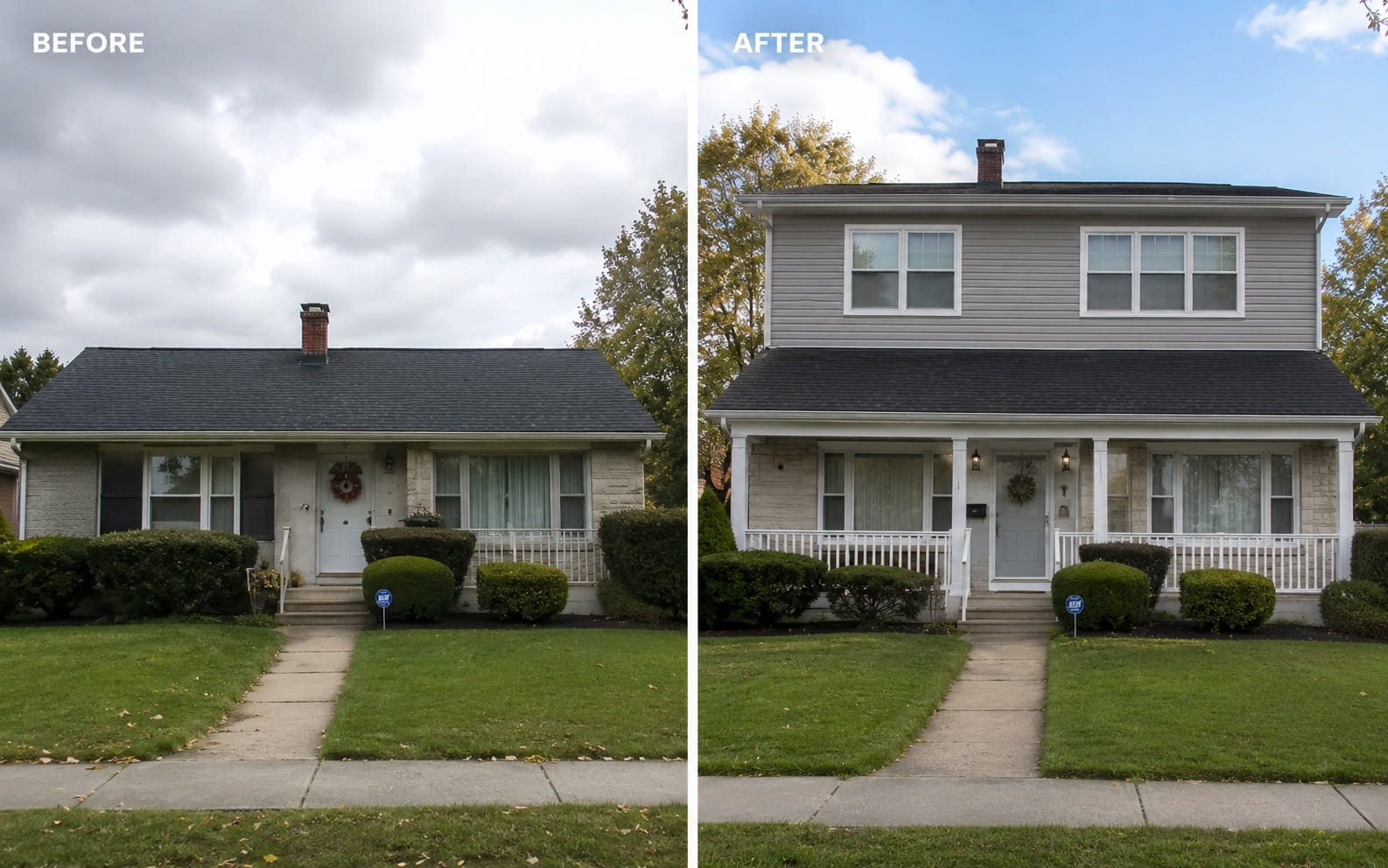
A second story addition builds an entirely new floor on top of your existing home. For a single-story ranch or cape cod, it means going from 1,200 square feet to 2,400 square feet without using any additional lot coverage.
It’s the highest-impact way to expand in Nassau County — particularly on the South Shore where lot sizes average 5,000–7,000 square feet and zoning setbacks leave little room for first-floor expansion.
The work involves removing the existing roof, reinforcing or rebuilding the first-floor walls to carry the added load, framing an entirely new upper level, and installing a new roof. Done properly, the exterior looks like the house was always two stories.
Is Your Home a Candidate for a Second Story?
Ranch Homes
A full ranch — one story, continuous foundation — is the ideal candidate. The footprint already matches what you want upstairs. We assess whether the existing first-floor framing can carry a second floor or needs reinforcement.
In Nassau County’s older housing stock, many ranches were built with 2x4 exterior walls. Second story projects on these homes typically require sistering the studs or replacing the wall system — work that’s standard for experienced contractors but requires a structural engineer’s review.
Cape Cods
A cape cod already has partial second-floor space (the knee wall and attic area). A second story addition on a cape typically means raising the roof and building out full-height walls where the sloped ceiling currently sits. This is sometimes combined with a dormer to maximize the upper level.
What Disqualifies a Home?
- Structural issues in the foundation or first-floor framing that exceed what reinforcement can address
- Zoning restrictions in certain incorporated villages that limit building height (this is rare in residential Nassau County but worth checking)
- Active open permits or violations that haven’t been resolved — these need to be cleared first
Nassau County Structural Requirements
Nassau County requires a licensed structural engineer to stamp the plans for any second story addition. This is not optional and is not waived for smaller projects.
The engineer’s scope includes:
Foundation assessment: Can the existing foundation carry the additional load? Most Nassau County homes built after 1950 have adequate foundations, but we verify this before designing anything.
First-floor wall evaluation: Load-bearing walls need to be identified and evaluated. Sometimes header replacements or new columns are required.
Second-floor framing design: The floor joists, beam sizing, and point loads all need to be engineered. We don’t estimate — we calculate.
Roof framing plan: The new roof needs to be engineered for Nassau County’s wind load requirements.
The structural drawings get submitted to the building department along with the architectural plans. Towns and villages in Nassau County review structural documents carefully for second story work — this is not a rubber-stamp permit.
Our Process for Second Story Additions in Nassau County
Assessment and Engineering
We visit your home, review your survey and existing C/O, and bring in our structural engineer for an initial assessment. We’ll tell you upfront whether your home is a good candidate and what the engineering scope looks like.
Architectural Design
Working with our architect, we design the second floor layout based on what you need — bedrooms, bathrooms, closets, a hallway that works with the stairs. We also design the exterior to look intentional, not like an afterthought.
Permit Filing
Plans go to your municipal building department. For most of south Nassau, that’s the Town of Hempstead. For villages like Garden City, Mineola, or Great Neck, it’s the village building department. Timeline: 4–8 weeks for review.
Construction
We work in phases to minimize your time out of the house. Typically: demo the roof, frame the second floor, get it weathertight, then complete the interior while you live below. Depending on scope and season, most second story additions take 4–7 months from permit approval to final CO.
Final Inspection and CO
We schedule and attend every inspection. The project isn’t done until the Certificate of Occupancy is in hand.
Living Arrangements During Construction
One of the most common questions: do we have to move out?
Short answer: often you can stay, but plan for disruption. We use temporary weatherproofing when the roof is open, and sequence the work to limit exposure. However, there’s a period of significant noise and dust — typically 3–6 weeks during the rough framing and roofing phase.
Some families arrange to stay with relatives or rent temporarily during the loudest phase. We can give you a realistic sequence during the planning stage so you can make an informed decision.
Why Second Story Additions Work in Nassau County
Lot Coverage Is Not a Factor
Nassau County’s residential zoning typically limits lot coverage to 25–35% of the lot area. A second story doesn’t count toward lot coverage — you’re going up, not out. For homeowners who’ve already used their lot coverage allowance with a rear extension or garage, a second story is often the only option.
The South Shore Problem
In Valley Stream, Lynbrook, Rockville Centre, and Elmont, lot sizes average 40x100 feet. After setbacks — typically 5 feet on each side, 25 feet in the rear — the buildable area on the ground floor is already maximized for most homes. Going up is the only real option for meaningful square footage.
Nassau County Housing Prices Make It Worth It
A second story addition adds substantial equity. In Nassau County’s market, the cost of the addition is typically less than the cost of buying a larger home nearby — and you keep your school district, your neighbors, and your existing mortgage rate.
Service Areas for Second Story Additions
We build second story additions throughout Nassau County:
… and all Nassau County municipalities.
Frequently Asked Questions
Do I need a structural engineer for a second story addition in Nassau County?
Yes, Nassau County requires stamped structural drawings from a licensed New York engineer for all second story additions. This is not optional. We include engineering coordination in our full-service process.
How long does a second story addition take from start to finish?
From first consultation to Certificate of Occupancy: typically 8–14 months. That includes design (4–8 weeks), permit review (4–8 weeks), and construction (4–7 months). Projects with complications — prior violations, village board review — can take longer.
Can I add a second story to a cape cod, or does it need to be a ranch?
Both work. Cape cods already have a partial second floor — we expand it by raising the roofline and building out full-height walls. Ranches get a completely new floor added on top. The structural approach differs, but both are projects we do regularly in Nassau County.
Will my existing foundation support a second story?
Usually yes for Nassau County homes built after 1945, but we never assume. Our structural engineer evaluates the foundation before we finalize the design. If reinforcement is needed, we address it in the scope.
How do I get a quote?
Call (516) 494-3370. We'll schedule a site visit, assess your home's structure and zoning situation, and give you honest guidance on feasibility before any design work begins.
Thinking About Adding vs. Moving?
Read our [second story addition vs. moving comparison](/second-story-addition-vs-moving-nassau-county) — a real cost breakdown for Nassau County's 2025 market.
Keep Exploring
Related Services & Areas
Service
Home Additions
Nassau County home additions specialists. We handle permits, zoning, and full construction for room additions, second stories, and extensions. Free quote.
Read moreService
Dormers
Nassau County dormer specialists. Convert attic space into bedrooms and bathrooms. Shed, gable, and hip dormers. Licensed, permitted, insured. Free quote.
Read moreService Area
Valley Stream Home Additions
Home additions in Valley Stream, NY. Local specialists for room additions, second stories, dormers, and extensions. Free quote — call (516) 494-3370 today.
Read moreService Area
Rockville Centre Home Additions
Home additions in Rockville Centre, NY. Dormers, room additions, and second stories for South Shore Nassau County homes. Permits handled. Free estimate.
Read moreGuide
Second Story Addition vs Moving Nassau County
Second story addition vs moving in Nassau County — a 2025 cost comparison. We break down transaction costs, taxes, rate shock, and addition costs side by side.
Read moreGuide
Second Story Addition vs Moving Nassau County
Second story addition vs moving in Nassau County — a 2025 cost comparison. We break down transaction costs, taxes, rate shock, and addition costs side by side.
Read moreReady to get started?
Get a Free Quote