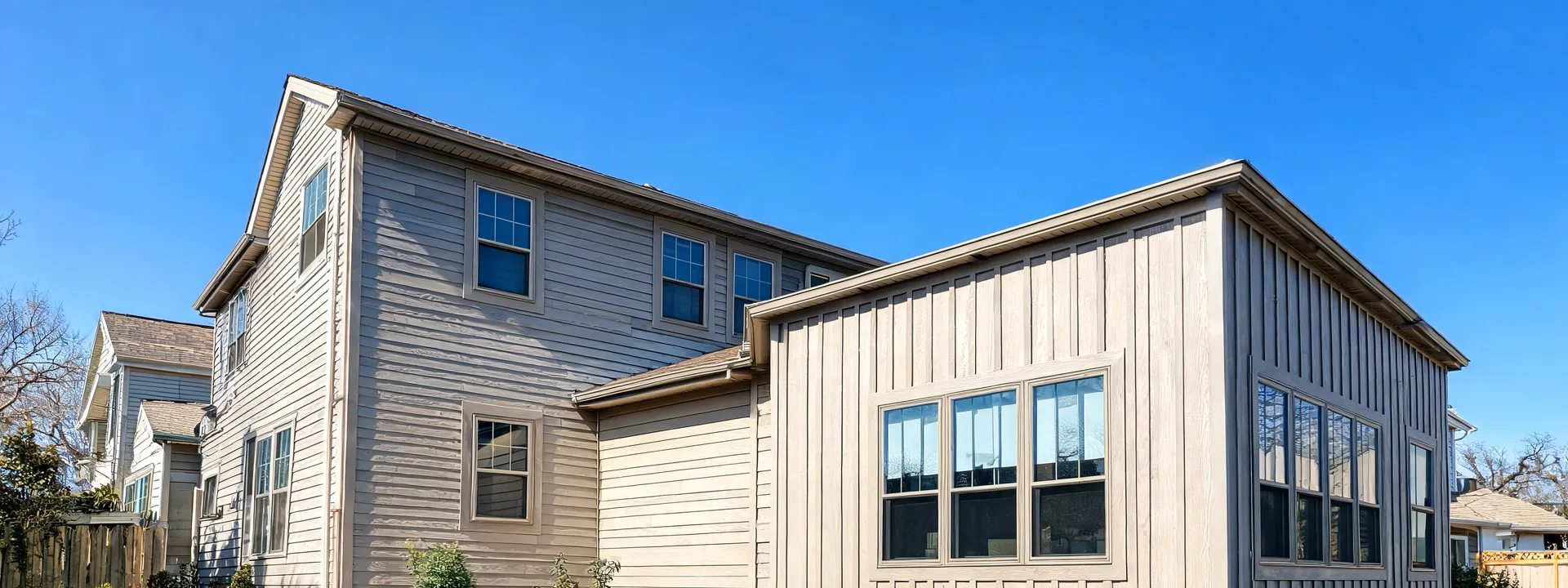
Home Extensions vs. Home Additions — What’s the Difference?
The terms are used interchangeably, but there’s a useful distinction. An extension pushes an existing room outward — your kitchen gains 12 feet into the backyard, your living room expands along the side of the house. An addition creates an entirely new room that didn’t exist before.
Extensions are often structurally simpler because you’re working within the existing room’s envelope. The permit scope is typically smaller, and the construction timeline is shorter. That said, both require permits in every Nassau County municipality, both require a licensed contractor, and both require final inspections and a Certificate of Occupancy.
If you’re not sure which applies to your project, call us. We’ll review your layout, your lot, and your goals and tell you which approach makes more sense.
Types of Home Extensions We Build
Kitchen Extensions
Kitchen extensions are the most common request in Nassau County. The typical scenario: a 1950s or 1960s colonial with a small, closed-off kitchen that backs up to the yard. We push the rear wall out 10–16 feet, which can transform a 150-square-foot kitchen into a 300-square-foot open layout.
Structural considerations include: the existing rear wall is often load-bearing, so the beam work matters. We also handle the HVAC extension — the new kitchen space needs to tie into the existing ductwork or get a mini-split.
Living Room and Family Room Extensions
Side-yard extensions on the living room side are common in older colonials where the living and dining rooms are separated from the kitchen by a wall. Pushing out creates the open floor plan that today’s buyers expect.
Side extensions require attention to setbacks — typically 5 feet from the property line in most Nassau County residential zones. We check your survey before designing anything.
Primary Bedroom Extensions
Adding square footage to a first-floor primary bedroom — particularly to accommodate a bathroom and walk-in closet — is a popular project in older Nassau County homes that were built before ensuite bathrooms were standard.
In-Law Suite Extensions (First Floor)
A first-floor in-law extension typically adds a bedroom, bathroom, and small sitting area accessible from the main house. This is different from a mother-daughter extension, which requires a separate entrance and full kitchen. A standard in-law extension is treated as a room addition by building departments.
Sunrooms and Four-Season Rooms
Four-season sunroom extensions are built to full residential standard — insulated walls, heated, with proper windows and electrical. These require full permits in Nassau County and must meet residential energy codes.
Zoning and Setbacks in Nassau County — What Controls Your Extension
How far you can extend depends on three things:
1. Setback Requirements Most residential zones in Nassau County require a minimum of 5 feet on each side yard, 25–35 feet in the rear. Your survey shows your current setbacks. We calculate how much room you have before your extension triggers a variance.
2. Lot Coverage The total footprint of all structures on your lot — house, garage, shed — typically cannot exceed 25–35% of the lot area (varies by municipality and zone). Extensions add to that footprint. If you’re already near the maximum, a second story or dormer may be a better option.
3. Incorporated Village Rules If your home is in an incorporated village — Garden City, Mineola, Lynbrook, Rockville Centre, Valley Stream — your village’s zoning code applies, not just the town’s. Village codes sometimes have stricter setbacks or additional design review requirements.
We pull your zoning information as part of the initial consultation. You don’t need to research this yourself.
Our Process
Consultation: We visit your home, review your survey, and assess what’s feasible given your lot, setbacks, and existing structure.
Design: We work with our architect to produce plans for permit submission. Extensions that involve structural changes — removing load-bearing walls, adding large beams — require engineering drawings.
Permits: Filed with your building department. Timeline: 3–6 weeks for straightforward extensions, longer for projects requiring variance review.
Construction: Demo of existing exterior wall, foundation work if needed, framing, weathertight shell, interior rough work, finish. Most single-room extensions take 8–14 weeks of active construction.
CO: We attend every inspection and close out the permit with the final Certificate of Occupancy.